




I usually judge a restaurant app by what happens after the first order. A polished menu can make a strong first impression, but the real test is whether the app remains useful when I am tired, hungry, and trying to decide quickly. Denny’s takes a practical approach: it is a free Food & Drink app from Denny’s, Inc that puts the restaurant’s online ordering experience on a phone. After spending time with it, I see the appeal immediately, although its lasting value depends heavily on how often Denny’s is already part of your routine.
The app is aimed at a very specific moment: I already know I want Denny’s, and I would rather arrange the meal digitally than wait to order in person or make a phone call. That focus is a strength. It does not try to become a general restaurant guide or a broad food-delivery marketplace. Instead, it gives Denny’s customers a direct way to browse and place an order. The question is whether that focused convenience is enough to keep it installed once the novelty wears off.
How Denny’s holds up beyond the first order
The first-week appeal is straightforward and useful
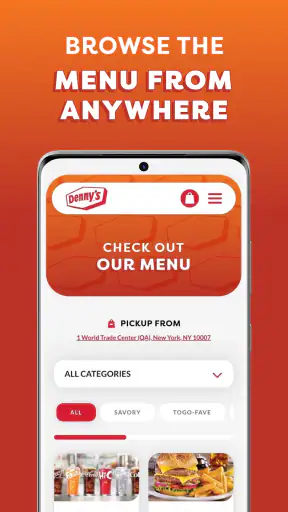
During the first few uses, the main benefit is obvious: I can look through Denny’s choices at my own pace instead of making decisions while standing at a counter. That matters when I am ordering for more than one person, comparing several breakfast combinations, or trying to remember which changes I wanted to make. A phone screen gives me room to pause, review, and correct the order before sending it.
That makes the app particularly handy for a realistic weekday situation. Suppose I am leaving home late, someone else wants a different meal, and I need to arrange a pickup without turning the whole process into a conversation at the restaurant. I can use the app to work through the menu, check the selected items, and submit the order before heading out. The value is not excitement; it is reducing small decisions at an inconvenient time.
I also like the directness of the experience. Since this is Denny’s own ordering app rather than a multi-restaurant service, the purpose is clear from the moment I open it. I am not sorting through unrelated restaurants, delivery promotions, or competing menus. For a customer who already has a Denny’s location in mind, that narrower scope can feel faster than opening a general delivery app and searching from scratch.
There is a useful trade-off here. A dedicated restaurant app can be less flexible than a service that compares many nearby options, but it can also avoid the clutter that comes with that comparison. If my priority is “find any breakfast nearby,” Denny’s is the wrong starting point. If my priority is “order from Denny’s with fewer steps,” its specialization makes sense.
What I would check before relying on it
I would not treat the first successful order as proof that every future order will be equally smooth. Restaurant ordering depends on the location, the time of day, menu availability, and the practical details of preparation. Before I build the app into a tight schedule, I would check that the selected restaurant is the one I actually intend to use and that the order details match what I want.
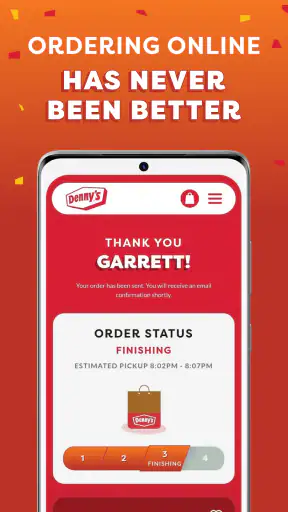
My strongest practical tip is to review the entire basket before confirming, especially when ordering several customized meals. A rushed tap can turn a simple order into an unwanted substitution or an extra item. I would also keep the confirmation screen available until the food is collected, because it gives me a quick reference if I need to check what I submitted.
This is not a criticism unique to Denny’s, but the dedicated format changes my expectations. When I use a general delivery platform, I am accustomed to seeing broader comparisons and delivery-oriented information in one place. With Denny’s, I am choosing the restaurant first and convenience second. That is a good arrangement for loyal customers, not necessarily for people still deciding where to eat.
The app’s place among the usual alternatives
Compared with ordering at the restaurant, the app gives me more time to inspect the menu and less pressure to decide aloud. Compared with calling, it reduces the chance of mishearing an item or modification, while also giving me a record of the order I entered. Those are meaningful advantages for group meals and for anyone who dislikes making phone orders.
Compared with a general delivery app, the experience is more focused but less useful as a discovery tool. A marketplace is better when I want to compare restaurants, delivery options, or cuisines. Denny’s is better when the restaurant itself is already the decision. I would not install it as my only food-ordering app unless Denny’s was a recurring choice in my household.
There is also a difference in how I think about the cost of convenience. The app itself is free, which removes the usual barrier to trying it. Still, “free” does not automatically make it the best ordering route for every meal. I would compare the final ordering conditions with the alternatives available to me, especially if I am deciding between pickup, eating in, or using a third-party service. The app earns its place through saved effort, not simply because there is no download charge.
Month-to-month value depends on habit
After the first month, the question changes from “Can this place an order?” to “Does this save me enough effort to keep?” For a regular Denny’s customer, the answer can be yes. Repeated visits create a simple habit: open the app when I want the restaurant, choose the location, build the meal, and review the details. That routine is more valuable than the first-use novelty because it removes repeated friction from a familiar task.
The app makes the most sense for people who order the same type of meal often but still need occasional flexibility. I might have a usual breakfast on one visit, then choose something different when ordering for a family member. A dedicated ordering route gives me a consistent place to start without forcing me to remember a phone number or search the web each time.
For occasional customers, the value is weaker. If I visit Denny’s only once every few months, I may not gain much from keeping a separate app on my phone. In that situation, a browser or a broader food service may be enough. The decision is not about whether the app works; it is about whether the repeated convenience outweighs the space and attention of another installed app.
I would describe the recurring value as situational rather than universal. It becomes part of a useful routine for commuters, families arranging breakfast, travelers who already know they want Denny’s, and customers who prefer entering orders themselves. It is less compelling for people who mostly eat at home, rotate among many restaurants, or prefer face-to-face ordering.
Small workflows that improve repeated use
One of the most useful habits is to separate browsing from ordering. When I have time, I can look through the choices without being under pressure, decide what I actually want, and then place the order later. That prevents the common mistake of opening an ordering app while hungry and choosing too quickly. The app is more helpful when I use it as a planning tool rather than only as an emergency button.
For group orders, I would collect everyone’s choices before opening the final checkout process. That sounds minor, but it reduces the chance of repeatedly editing a basket while another person changes their mind. I would also read the final summary aloud or send it to the group before submitting. This is a simple workflow, yet it turns the app into a shared ordering aid instead of a private list that everyone assumes is correct.
Another useful trade-off is deciding when not to customize. Digital ordering makes modifications feel easy, but every additional change creates another detail to verify. If a standard menu choice already works, I would keep it simple. If a dietary need or strong preference matters, I would take the time to inspect the order carefully rather than assuming the app will interpret my intention the way I do.
These habits are where the app’s lasting value comes from. The software does not need to entertain me every month. It needs to make a recurring restaurant task predictable, readable, and less stressful. In my experience, that is a better measure of a food-ordering app than the number of visual flourishes it includes.
Maintenance is light, but attention still matters
The app is free and carries an Everyone content rating, so it is easy to recommend as a low-risk trial for a broad audience. It has been available since January 8, 2014, and the current version is 2.59.0, which suggests an established product rather than a brand-new experiment. On Android, it requires version 8.0 or later, so users with older devices should check compatibility before planning around it.
Those details matter less during a single order than they do over time. An established app can be reassuring when I want a restaurant tool that has had time to mature, but I still need to keep it updated in the normal way and make sure my phone can run the current release. I would not want to discover a compatibility issue on the morning I need breakfast quickly.
The maintenance burden is otherwise modest. This is not an app that demands daily attention, constant content management, or a complicated setup routine. The main responsibility falls on me: keep the app available, make sure I am using the correct restaurant context, and review each order before submitting it. That is a manageable burden for regular customers and probably not worth it for people who rarely use the chain.
I would also avoid assuming that installing the app eliminates every possible ordering delay. Digital ordering can reduce communication friction, but it does not remove the need to allow time for preparation and collection. If I am already late, I would not treat a submitted order as a guarantee that the meal will be ready the instant I arrive. The app helps organize the request; it does not replace sensible timing.
Where fatigue can set in
The biggest source of fatigue is repetition. If my orders are nearly identical and I do not visit Denny’s often, opening a dedicated app may eventually feel like an extra step rather than a shortcut. A general service or direct web search can seem more convenient when I am already using that tool for several restaurants.
Another possible frustration is the narrow purpose. I cannot use this app to compare Denny’s with another breakfast restaurant in the same ordering flow. That limitation is deliberate, but it affects long-term appeal. The app is strongest after I have made the restaurant decision, not while I am still exploring alternatives.
Digital menus can also encourage overthinking. I may spend more time adjusting an order on a screen than I would have spent making a quick choice in person. That is useful when I need precision, but it can become tiring for a simple meal. My solution is to use the app when I value control or convenience, and choose in-person ordering when I am already at the restaurant and want the fastest possible interaction.
There is a social fatigue factor as well. When ordering for several people, the person holding the phone can become responsible for every correction. I would use the app to organize the order, but I would still confirm the important details with everyone else. That small check prevents the convenience of digital entry from becoming a source of blame when someone’s meal is wrong.
Who should keep it installed
I think Denny’s is worth keeping for customers who return to the chain regularly, prefer pickup-style digital ordering, or often coordinate meals for more than one person. It is also a sensible choice for anyone who wants to avoid phone calls and prefers to inspect their selections visually before sending them.
The app is less suitable as a general food companion. If I want restaurant discovery, broad price comparison, or one place for many chains, I would choose a marketplace or use the web. If I almost always dine inside and enjoy ordering directly from staff, the app may not add enough value to justify a permanent place on my phone.
The public response gives the app a solid baseline: it has an average rating of 4.3 from around forty-three thousand ratings, with more than one million installs. I read that as evidence of broad usefulness, not as a promise that every location or order will feel identical. Ratings can tell me that the concept works for many people; my own ordering habits determine whether it works for me month after month.
My long-term verdict
After the novelty fades, Denny’s remains useful because it solves a narrow, repeatable problem well: ordering from Denny’s without relying on a counter conversation or a phone call. Its strongest qualities are focus, convenience, and the ability to review an order before submitting it. Those advantages become more noticeable when I am coordinating breakfast for several people or trying to fit pickup into a busy morning.
Its weaknesses are just as clear. It does not replace a multi-restaurant service, it may be unnecessary for infrequent visitors, and digital ordering still requires careful checking and realistic timing. I would not install it expecting a complete food-discovery experience. I would install it because I already choose Denny’s and want a more controlled way to place that order.
My recommendation is simple: keep it if Denny’s is part of your recurring routine, and skip it if you are only looking for a general restaurant-ordering tool. As a free app from Denny’s, Inc, it is easy to try, and its Everyone rating makes it approachable for a wide audience. For me, it earns lasting space not through novelty, but through the quiet benefit of making a familiar meal easier to arrange when the timing matters.


